Squirrel in Forest Redwork: A Designer’s Gift Review
First Stitch Impressions of This Woodland Design
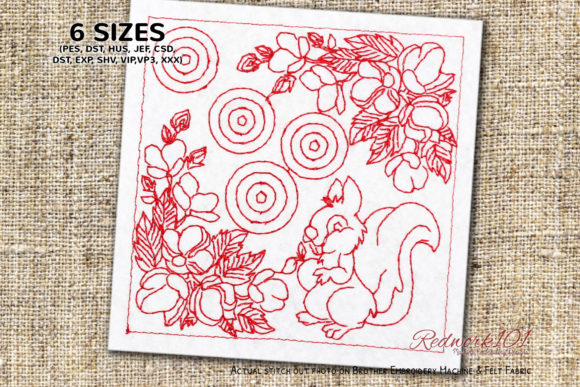
When I opened the Squirrel in Forest Redwork embroidery file, the mood immediately felt nostalgic and handmade. There is a quiet elegance in redwork that always appeals to gift buyers — it’s not loud or trendy. The squirrel itself has a gentle, storybook pose, and the surrounding forest hints at something folk-inspired without feeling old-fashioned. For a personalized gift line, that sweet balance is rare. It doesn’t feel overly childish, which means I can use it for a baby blanket and a sophisticated kitchen towel with equal confidence.
The charm sits in the delicate linework. Because this is redwork, the stitch density is lighter than a filled design. Fine whiskers, tiny leaves, and the squirrel’s tail detail catch the eye instantly. I immediately checked if the thread lines would hold up on textured fabric — more on that later — but my first mockup on smooth quilting cotton gave a crisp, clean result. There’s an emotional warmth here that is neither romantic nor playful in a cartoonish way; it’s gently whimsical, the kind of piece that makes a handmade product feel like an heirloom from the first glance.
Baby Embroidery That Feels Vintage, Not Cliché
New parents are often flooded with bold, primary-colour baby items. Squirrel in Forest Redwork offers something quieter. I would reach for this design on a baby embroidery blanket or a nursery pillow cover. The single-color nature makes it gender-neutral without trying too hard. On a soft cream or ecru background, the red stitching becomes the star — elegant enough to display in a modern nursery, sweet enough to feel baby-appropriate. Because the stitch lines are moderate, I find it safer on delicate muslin swaddles than dense fills, provided you use a stabilizer that doesn’t stiffen the fabric.
Wedding Gifts and Family Keepsakes
Personalization changes everything. When I test a design, I imagine stitching a couple’s initials or a small date beneath the squirrel. Redwork inherently carries an antique, romantic feel, making this a strong candidate for wedding gift linens or a custom ring bearer pillow. I also see it stitched onto a fabric photo album cover for an anniversary. The squirrel’s calm, observant posture gives a “togetherness” vibe — it’s not lonely, just peaceful. That emotional connection is what encourages customers to pay a premium for a finished product instead of a generic store-bought item.
Kitchen and Home Textiles With a Woodsy Touch
For an embroidered towel, this redwork hits the mark. Flour sack towels, linen tea towels, or even a cafe apron take on a farmhouse appeal. I tested a mockup on a natural oatmeal-coloured linen, and the result looked like something you’d find in a high-end craft boutique. Because the motif is medium-sized, it fits well across the lower corner of a towel without overwhelming the space. For a pillow cover, it would be lovely paired with a simple envelope closure, allowing the design to float in the centre without competition.
Tote Bags and Everyday Embroidered Items
Canvas tote bags are a staple for many Etsy sellers. This design translates beautifully onto medium-weight canvas in a soft brick red or deep burgundy thread. The woodland aesthetic appeals to nature lovers, hikers, or anyone who shops at farmers’ markets. I find that shoppers at craft fairs gravitate toward animals that look artistic rather than mass-produced. A squirrel foraging in a sketched forest feels intentional and “small shop” rather than “big box.” That difference directly affects customer trust and willingness to buy a custom embroidery piece online.
Understanding the Redwork Advantage for Personalized Orders
Redwork stitches faster than dense tatami fill designs. This matters when you’re running a small business. A quicker stitch-out means shorter machine time, less thread waste, and fewer chances for tension errors. It also reduces the stiff feel some customers dislike. The lightweight coverage of Squirrel in Forest Redwork makes it suitable for blanket embroidery that must remain soft against skin. I noticed the tail texture uses a clever combination of running stitches and tiny geometric fragments that read as fur without heavy coverage, which is a win for baby items.
However, the simplicity of redwork also exposes any imperfections. If your tension is off or your fabric shifts, the gaps in linework become obvious. Always test on scrap fabric first, especially the same material weight you’ll use for customer orders. I cannot stress enough how critical this step is for designs with long continuous lines like tree branches or the squirrel’s back curve.
Textured and Stretchy Surfaces
Thick towels with deep texture can swallow fine redwork lines. The squirrel’s inner ear detail or the tiny leaf veins may disappear. If you must use terrycloth, consider a heavy water-soluble topper to keep the stitches on the surface, and accept that you’ll lose a bit of crispness. For stretchy baby clothes, avoid pulling the fabric too tight in the hoop. The squirrel outline doesn’t forgive distortion — a stretched neckline will warp the face slightly, enough to bother a discerning gift buyer.
Dark Fabric and Thread Contrast
Redwork on dark fabric can be striking, but only if the thread color truly pops. I tested a digital mockup on forest green and charcoal, and I found that a true scarlet red holds up, while muted terracotta reds sink into the background. If you plan to offer this as a custom embroidery option on dark linen totes or denim, order a few thread samples first. Product photography on dark backgrounds can also be tricky — buyers need to see the detail clearly, so your printable mockup or listing photo must be well-lit and crisp.
Delicate Details After Repeated Washing
Any design sold for a functional item — a towel, an apron, a baby bib — will face laundry. Redwork generally holds up well because it doesn’t have long satin stitches prone to snagging. Still, I would always recommend a gentle wash cycle in your care instructions. The tiny eye detail and whiskers in Squirrel in Forest Redwork are thin enough that a vigorous wash with no fabric softener over time might cause slight fuzzing. For a wedding keepsake that might never be washed, this is irrelevant. For daily-use kitchen linens, it’s a gentle caveat to share with your customer, which builds buyer engagement and trust through honesty.
Giftability and Perceived Value in a Small Shop
What makes a design giftable? It’s the story it tells. When a customer lifts a towel with Squirrel in Forest Redwork from market packaging, they should feel like they’ve discovered a tiny woodland scene. That narrative boosts perceived value far beyond materials and stitch time. As a product planner, I think about the entire unboxing experience. A squirrel in a forest evokes quiet mornings and nostalgia. Customers buying for grandparents, nature-loving friends, or a new baby are often drawn to exactly this emotional note.
For gift shop owners, this design also photographs beautifully flat-lay style with dried leaves, acorns, or a sprig of pine. Product photography that tells a visual story directly increases the sellability of a finished product. Even a simple kraft tag tied with twine elevates the item from a home craft to a considered gift under $40.
Practical Embroidery Notes for Professional Results
Before I stitch Squirrel in Forest Redwork onto any customer order, I run through a checklist. I strongly recommend the same for any Etsy seller or small shop owner planning to list items featuring this design:
- Test stitch-out on scrap fabric that matches the final product weight.
- Check thread color contrast on both light and dark background mockups — a red that looks perfect on white may appear dull on beige or grey.
- Confirm the hoop size required for the design file. If the full forest scene is wider than your standard hoop, plan accordingly before ordering blanks.
- Review stitch density for the facial area — if you scale the design down for a baby bib, ensure the eye doesn’t turn into an unrecognizable dot.
- Use a cutaway stabilizer for garments that will be stretched, and a tear-away or wash-away for stable woven items depending on the final look desired.
- After stitching, inspect small details like the squirrel’s claws and leaf veins with a loupe or magnifying glass. If one stitch is out of place, it can distract from the handmade quality you’re selling.
- Before you list the item for sale, verify your commercial embroidery license allows finished products to be sold. The file description mentions the box is optional and color may vary; always double-check any usage terms from the digitizer.
- Make a printable mockup for your shop listing so customers can visualize the design on their chosen product, especially for custom orders.
Matching the Design to Customer Personality
Over the years, I’ve noticed that woodland animal designs attract a specific buyer. They are often looking for a gift that feels connected to nature, thoughtful, and slightly understated. Squirrel in Forest Redwork will appeal to customers shopping for cabin dwellers, garden lovers, or parents who choose woodland nursery themes. The red thread adds a traditional crafting touch that resonates with those who appreciate handmade product culture. I’d lean into that by describing the stitching technique in listing copy — terms like “heritage redwork” or “vintage-inspired embroidery” signal quality immediately.
For an online craft marketplace, offering this design as a “ready to personalize” option with one line of text below the squirrel would be a strong sales move. The design’s composition leaves just enough blank space for a name, date, or short phrase without crowding the scene. A baby’s name and birth date, a couple’s initials, or a simple “Home” text would all complement the redwork style beautifully.
Final Thoughts Before Stitching for a Gift Client
Every time I sample a machine embroidery design for my product lineup, I ask one question: would I gift this to a family member? With Squirrel in Forest Redwork, the answer is a confident yes. The design supports the kind of subtle, emotionally rich personalization that transforms a simple towel or pillow cover into a meaningful keepsake. Whether you create wedding gift collections, baby shower bundles, or everyday nature-inspired home goods, this redwork piece deserves a place in your upcoming stitch queue. Just take the time to test, adjust thread choices, and choose fabrics that honor its fine linework. Your customers will feel the care — and that’s what brings them back to a small shop again and again.